

BUSINESS CREDIT STRATEGY GUIDE
The Secret Formula for Building Business Credit
Build a Stronger Business Credit Profile With the Right Strategy.
Building business credit takes more than registering a company or opening a business bank account. It requires proper business documentation, responsible financial management, appropriate credit relationships, and consistent payment practices.
Discover the important steps involved in establishing and developing a business credit profile.
Home › Business Credit › The Secret Formula for Building Business Credit
Updated: November 24, 2026 Read time: 10 min

BUSINESS CREDIT FUNDAMENTALS
Understanding the Formula Behind Business Credit
There is no single trick that creates business credit. The “secret formula” is a set of fundamentals: a verifiable business identity, a proper legal structure, an EIN and organized records, dedicated business banking, accounts that report payment activity, and a consistent history of paying on time.
Each piece helps lenders, suppliers, and credit reporting agencies recognize the business as a separate, organized entity with its own track record. Together, they can contribute to a more established business credit profile over time.
Key Elements Include:
- Business identity
- Legal business structure
- EIN and documentation
- Business banking
- Reporting relationships
- Payment history
- Financial responsibility
The Secret Formula — Step by Step
Most business owners work through these six steps in order. Requirements vary by lender, supplier, and reporting agency.
01
Establish Your Business Identity
Register your business and get your EIN.
Form the company properly with the Colorado Secretary of State (or your home state), and obtain an Employer Identification Number from the IRS, which issues EINs free of charge. Use the exact same legal name, address, and phone number everywhere.
Takeaway: Consistent, verifiable details are the base every credit file is built on.
02
Organize Corporate Documentation
Keep your records organized and up to date.
Keep formation documents, bylaws or an operating agreement, ownership and share records, and any licenses in one place. Lenders and suppliers may ask for them, and missing paperwork can slow or stop an application.
Takeaway: Good records make every later step faster.
03
Establish Business Banking
Separate your business and personal finances.
Open a business bank account in the company’s name and run business income and expenses through it. A clean banking history helps show how the business operates. Each bank sets its own requirements, so approval is not guaranteed.
Takeaway: Separation protects your records and supports your business identity.
04
Build Reporting Relationships
Work with vendors and credit providers that report.
Trade credit with suppliers (net terms) and business credit cards are common starting points. Not every vendor or card issuer reports payment history to commercial credit bureaus, so ask before you rely on an account to build your profile.
Takeaway: Only reported accounts show up in a business credit file.
05
Maintain Responsible Payment History
Pay on time and manage your accounts.
Payment behavior is one of the most important parts of a business credit profile. Pay on or before each due date, keep balances manageable, and only buy what the business needs.
Takeaway: Consistency matters more than the number of accounts.
06
Monitor Your Business Credit
Track your profile and check for errors.
Review your files with the major business credit agencies periodically, confirm your business details, and use each agency’s process to correct anything inaccurate. As the business grows, evaluate new credit carefully against its cost and your cash flow.
Takeaway: Catching errors early protects the profile you’ve built.
Need an EIN? The IRS issues them free of charge: IRS — Employer Identification Number ↗
Establish a Strong Foundation for Your Business
Lenders, suppliers, and credit reporting agencies match information across many sources. When your business details are consistent everywhere, your records are easier to verify and less likely to be split across duplicate files.
- Business registration: An active entity in good standing with the Colorado Secretary of State or your formation state.
- EIN: A federal tax ID from the IRS, issued free of charge.
- Business address: A consistent address used on filings, bank accounts, and credit applications.
- Business telephone number: A listed number in the company’s name.
- Business bank account: An account in the company’s legal name for all business transactions.
- Corporate documentation: Formation documents, ownership records, and meeting minutes kept current.
- Licensing and compliance: Any licenses or permits your industry and location require.

Understand How Business Credit Reporting Works
Business credit reporting agencies collect information about companies — identity details, payment experiences reported by suppliers and lenders, and public records — and turn it into business credit profiles, reports, and scores that lenders and suppliers may review.
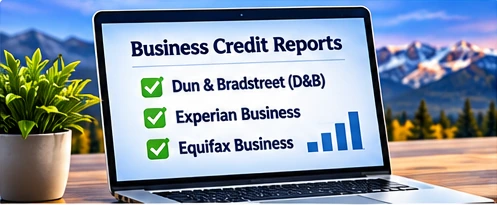
Dun & Bradstreet
Identifies businesses with a nine-digit D-U-N-S Number, available free of charge, and maintains business credit reports and ratings.
Experian Business
Maintains business credit profiles and risk scores, and explains how owners can obtain and dispute their reports.
Equifax Business
Provides business credit reports and scores to lenders; owners can order a copy of their business report.
- Business credit profiles: Each agency keeps its own file, so your profile can differ from one agency to another.
- Reporting relationships: Not every vendor or creditor reports, and those that do may report to only one agency.
- Payment history: On-time and late payments reported by creditors are a central part of most business files.
- Trade references: Suppliers you pay on terms can serve as references even when they don’t report.
- Credit monitoring: Reviewing your files periodically helps you spot and correct errors.
Registering with a reporting agency or getting a D-U-N-S Number does not by itself create a strong credit score. A profile develops from reported payment activity over time. Business credit reports also don’t carry all of the federal protections that cover personal credit reports. CFPB ↗
Agency names are used for identification only. Colorado Shelf Corporations has no partnership with any credit bureau.
Build Responsible Business Credit Relationships
The right accounts depend on what the business actually needs. Approval requirements and reporting practices vary by creditor, so confirm the terms of each account before you apply.
- Vendor accounts
- Trade credit
- Business credit cards
- Payment terms
- Responsible spending
- Timely payments
- Account management
| Account Type | How It Works | What to Check First |
|---|---|---|
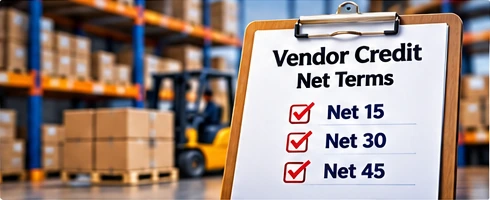
| Vendor / trade credit (net terms) | Buy supplies now and pay within an agreed period, such as Net 15, Net 30, or Net 45. | Approval requirements, the actual due date on each invoice, and whether the supplier reports. |
| Unsecured business credit card | Revolving card with no required deposit; the issuer reviews the business and often the owner. | Whether a personal guarantee is required, fees and APR, and how the issuer reports. |
| Secured business credit card | Revolving card backed by a deposit that often sets the limit. | Deposit terms, fees, and whether it reports to business bureaus. |
| Business line of credit | Draw funds up to a limit, repay, and draw again. | Revenue and time-in-business requirements, fees, and collateral or guarantee terms. |
Personal Guarantees: What to Know
A personal guarantee is a promise by an owner to repay specified business debts if the business can’t. Many business credit accounts, especially for newer companies, ask for one. A credit check and a personal guarantee are different things, and the signed agreement — not the entity type — determines who is responsible.
Business Credit Without a Personal Guarantee
Some products — certain trade accounts, corporate card programs, and secured financing — may not require a guarantee, depending on the business’s revenue, cash balances, assets, and history. Newer businesses with limited financials are often asked for one.
What About Credit-Line Hybrids?
“Credit-line hybrid” is a marketing term, not a standard product. It usually describes a combination of business credit cards or revolving lines arranged for working capital. Promotional rates end, standard interest then applies, and personal guarantees, credit checks, and fees are common. Funding amounts depend entirely on the provider and the applicant.
What Does the Business Credit Building Process Look Like?
1
Establish business identity
2
Organize corporate documents
3
Establish business banking
4
Research appropriate reporting accounts
5
Maintain responsible payment activity
6
Monitor business credit information
There is no universal timeline or guaranteed result. How a profile develops depends on how many accounts report, how often they report, and how consistently the business pays.

How Colorado Shelf Corporations Fit Into Business Planning
A shelf corporation is a company that was formed earlier, kept in good standing, and not actively operated. Buying one gives you an entity with an existing incorporation history. Before buying, review:
- Original incorporation date: Confirmed in Colorado Secretary of State filing records.
- Corporate history and state filings: Periodic reports and any amendments on record.
- Ownership documentation: Share certificates, stock ledger, and transfer paperwork.
- Good standing verification: Current status checked directly with the state.
- Buyer due diligence: Confirm there are no liabilities, debts, or obligations attached to the company.
An aged corporation provides an existing incorporation history. Its age alone does not establish business credit, revenue, operating history, lender relationships, or financing eligibility.
Avoid Mistakes That Can Affect Business Credit Development
Inconsistent business information
Mistake: Different names, addresses, or phone numbers across filings and accounts.
Better practice: Use identical details everywhere and update them together.
Missing corporate documentation
Mistake: Applying without formation, ownership, or banking records.
Better practice: Keep a complete, current set of company records.
Applying for credit without preparation
Mistake: Multiple applications before the business is ready.
Better practice: Check requirements first and apply for what the business needs.
Ignoring payment terms
Mistake: Treating Net 30 as “pay when convenient.”
Better practice: Pay by the date on each invoice or statement.
Assuming every vendor reports
Mistake: Opening accounts that never appear in a credit file.
Better practice: Ask each supplier whether and where it reports.
Believing a shelf corporation guarantees credit
Mistake: Expecting an older formation date to replace credit history.
Better practice: Build reported payment history after you take ownership.
Business Credit Myths vs. Responsible Strategies
| Common Assumption | Better Business Practice |
|---|---|
| Opening more accounts always improves credit. | Focus on a few suitable accounts that report, and manage them well. |
| A business entity automatically establishes credit. | An entity is the starting point; credit comes from reported payment activity. |
| Every vendor reports to credit bureaus. | Only some vendors and creditors report. Ask before relying on an account. |
| An aged corporation guarantees financing. | Lenders look at revenue, records, history, and credit — not formation date alone. |
| Business credit can be built overnight. | It develops over time through consistent, on-time payments. |
| A high credit limit is guaranteed by a good profile. | Limits depend on each lender’s review of your overall business. |
Related Business Credit Resources

Learn which common business credit misconceptions to avoid and understand better business credit practices.

Explore different business credit line options and understand important considerations when evaluating financing.

Learn about established Colorado corporations, incorporation dates, corporate documentation, and ownership transfers.
Frequently Asked Questions About Building Business Credit
1. What is the secret formula for building business credit?
There is no shortcut. The formula is a verifiable business identity, organized records, separate business banking, accounts that report payment activity, consistent on-time payments, and regular monitoring of your business credit files.
2. How do I start building business credit?
Register the business correctly, obtain an EIN, open a business bank account, and keep your details consistent. Then open suitable accounts in the company’s name with providers that report, and pay every bill on time.
3. How long does it take to establish business credit?
There is no fixed timeline. It depends on how many accounts report, how often they report, and how consistently the business pays. Each credit agency also builds its file differently.
4. What information is needed to establish a business credit profile?
Typically the legal business name, address, phone number, EIN, entity type and formation details, ownership information, and bank and trade references. Agencies and creditors set their own requirements.
5. Which agencies report business credit?
The three most widely known are Dun & Bradstreet, Experian Business, and Equifax. Each keeps its own files and scores, so your reports can differ between them.
6. Do vendor accounts help build business credit?
They can, if the vendor reports your payments to a business credit agency. Many vendors don’t report, so ask each supplier about its reporting policy before relying on it.
7. Does paying vendors on time improve business credit?
On-time payments that are reported can strengthen a business credit profile. Payments that aren’t reported won’t appear in a credit file, though the vendor may still serve as a trade reference.
8. Can I build business credit without a personal guarantee?
Sometimes. Some trade accounts, corporate card programs, and secured products don’t require one, depending on the business’s revenue, assets, and history. Newer businesses are often asked for a guarantee.
9. Does a Colorado shelf corporation automatically have business credit?
No. A shelf corporation has an earlier incorporation date, but it doesn’t come with credit history, revenue, or tradelines. Credit must be built through reported activity after you take ownership.
10. How can I monitor my business credit profile?
Contact each agency directly. Dun & Bradstreet lets companies view and request updates to basic information through its free D-U-N-S Manager, and Experian and Equifax offer business reports to owners, often for a fee.
Published by Colorado Shelf Corporations, Denver, Colorado · Last updated November 24, 2026
Sources: SBA — How to Use the ‘Rule of Three’ to Create a Business Credit Profile · SBA — How to Build Business Credit Quickly: 5 Simple Steps · IRS — Employer Identification Number · Colorado Secretary of State — Business · CFPB — Inaccurate small business credit reports
Disclosure: This article provides general educational information. Business credit eligibility, financing terms, and approval decisions depend on individual providers and applicant circumstances. Colorado Shelf Corporations is not a lender, credit bureau, or financial advisor.
Ready to Build a Stronger Business Foundation?
Understanding business credit and corporate structure can help business owners make more informed decisions. Explore Colorado Shelf Corporations and learn about established incorporation dates, verifiable corporate records, and documented ownership transfers.